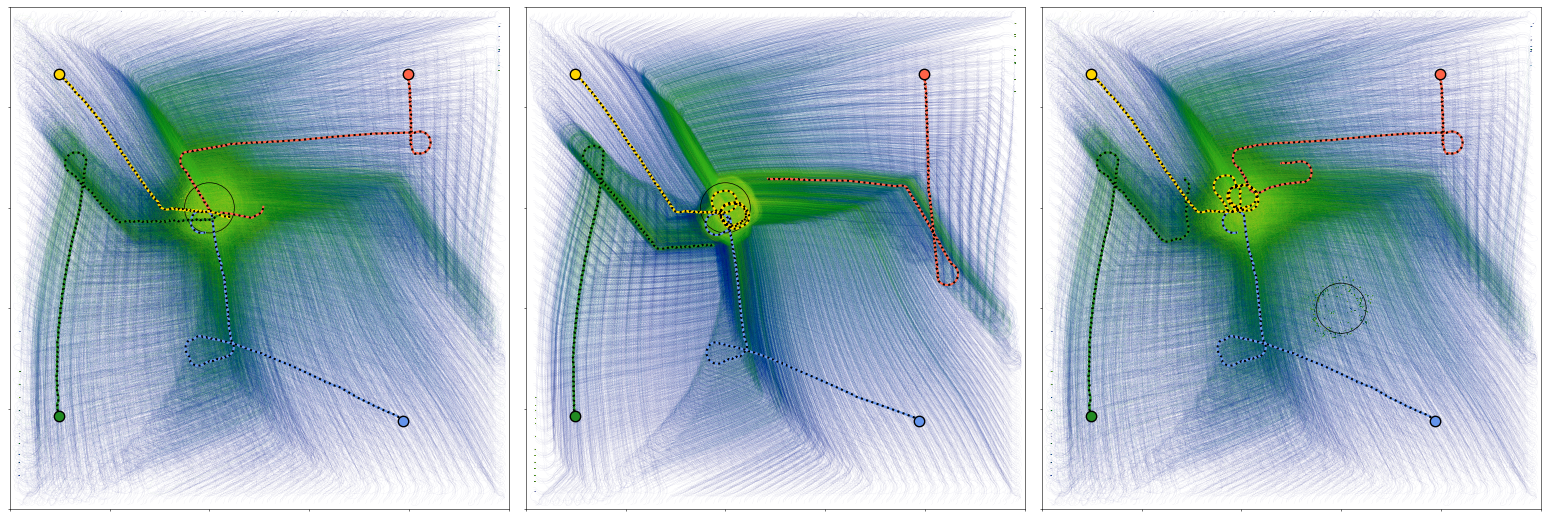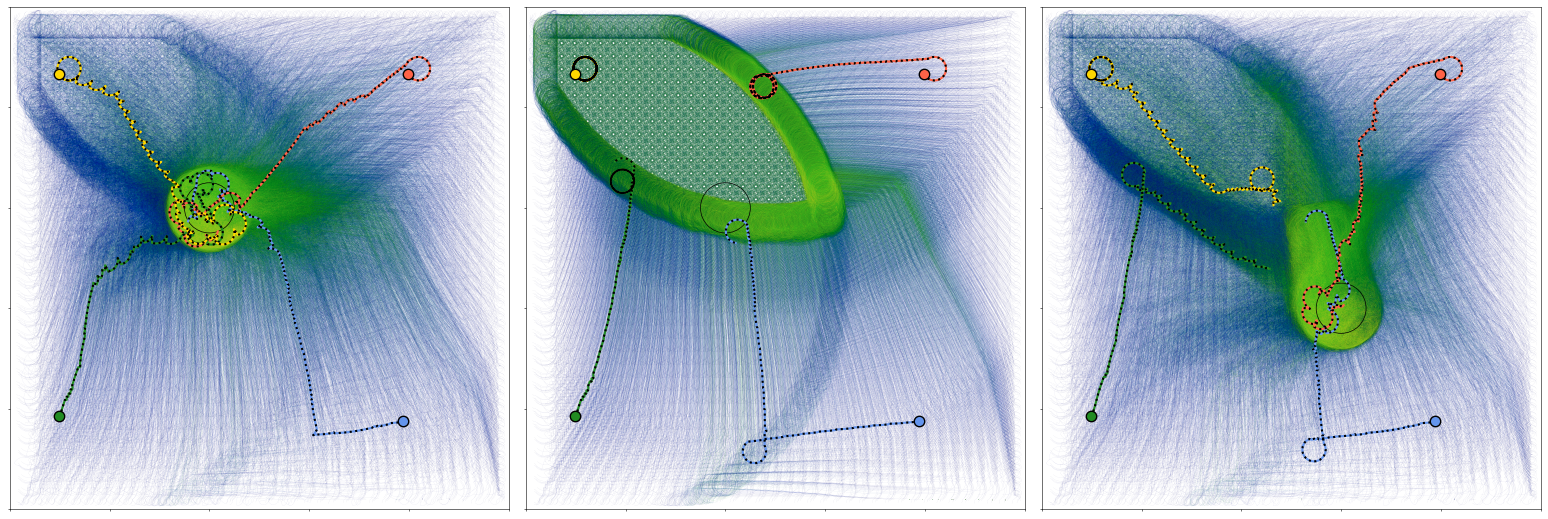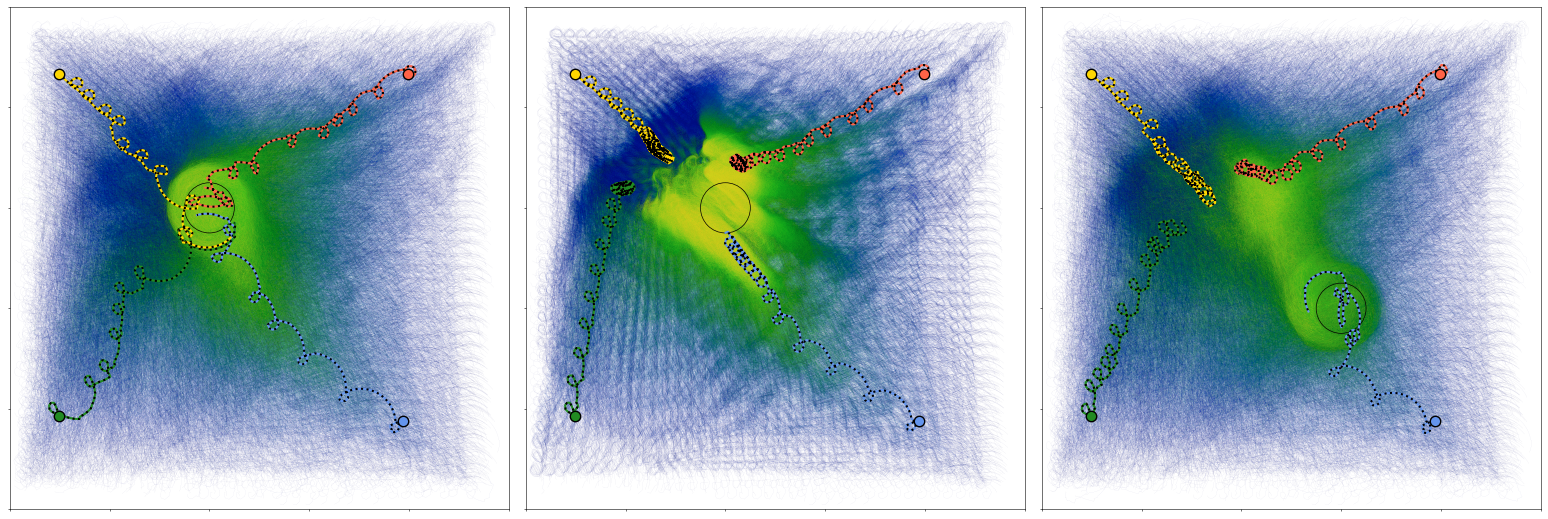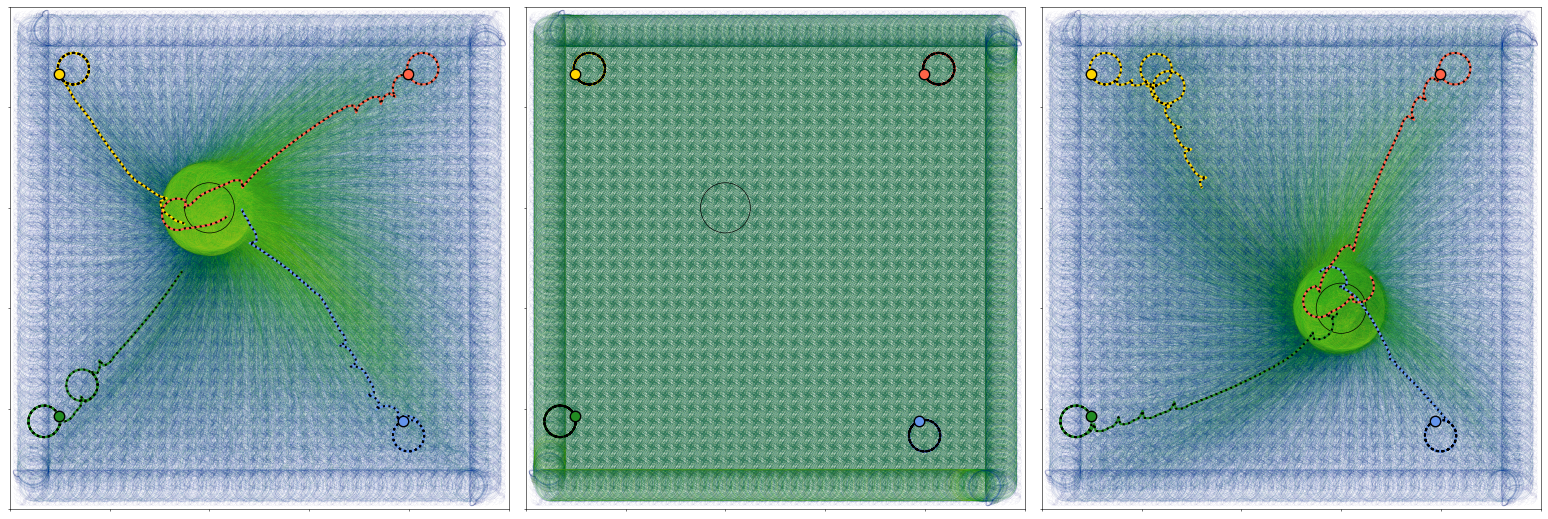
Social-Spatial Tradeoff in Visual Navigation
Published in arxiv, 2025
PhD Thesis - Part Two
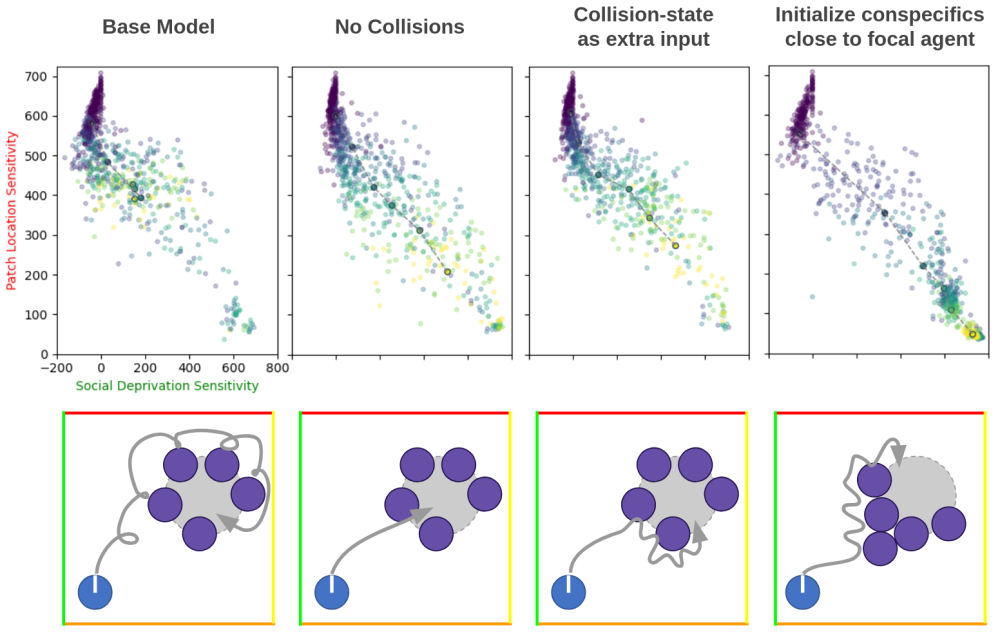
Characterizing a spectrum between individual-spatial and social learned navigation strategies.
Author: Patrick Govoni
Supervisor: Pawel Romanczuk
Affiliation: Institute for Theoretical Biology, Humboldt Universität zu Berlin
Group: Collective Information Processing Lab
Years: 2025-Present
Abstract:
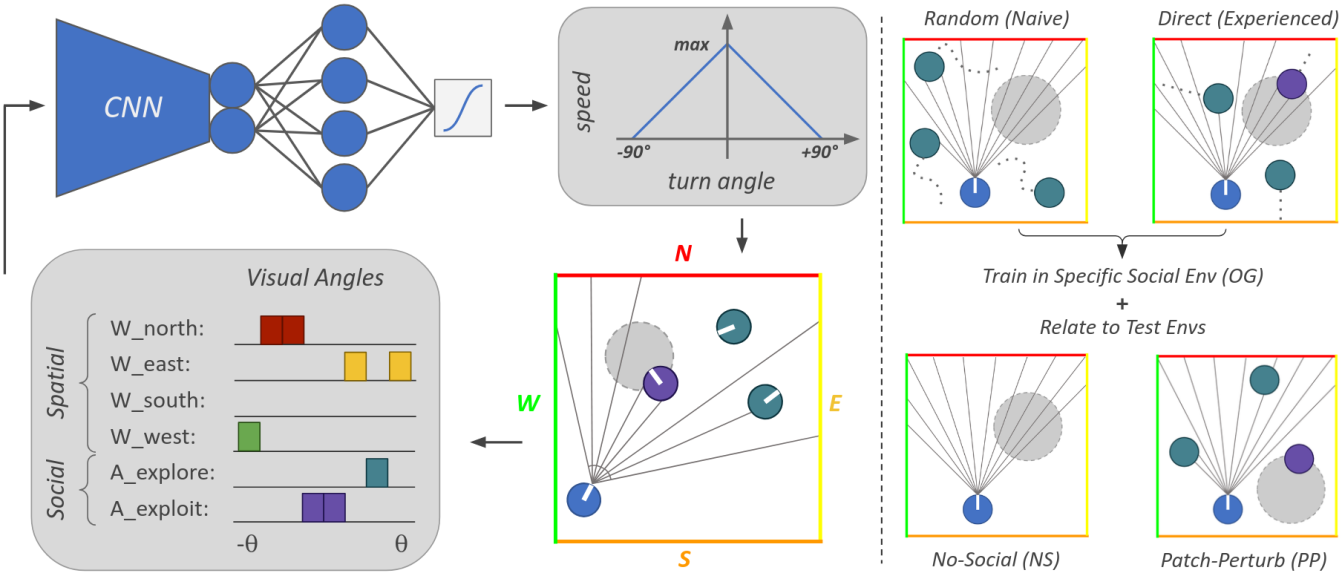
Navigation for social organisms rarely is a fully independent activity. Group structure and dynamics, as well as embodied interactions, critically influence useful behavior. Individual neural network controlled agents are trained to navigate in different social contexts, where social dependence and behavioral strategy learned is determined by relative task performance and spatial effect. Increasing high quality social information drives phase transitions from individual to following navigational strategy, and to collision avoidance in response to a crowded foraging patch. Predictable, nonstationary environmental dynamics drive behavioral hybridization between individual and social navigation, far and near the patch. Our findings challenge the approach of only inspecting individual behavior for social organisms and highlight the importance of taking a bottom-up approach in understanding how organisms behave.